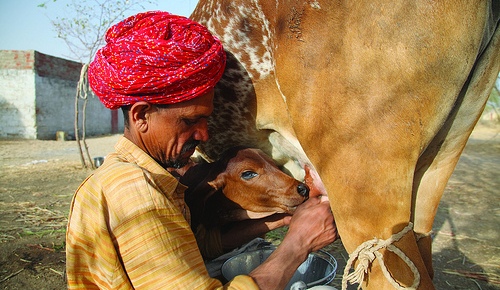
Dhiraj Singh with Punjabi farmers

ILRI Research Scientist, Dhiraj Singh (forefront), with local Punjabi farmers

Each week on this blog, we meet ILRI staff members, partners and projects in Asia to learn about their work, challenges and the opportunities they face to leverage livestock knowledge in Asia.

Originally from Bihar in eastern India, Dhiraj Singh has now lived in New Delhi for over a decade. Since joining the International Livestock Research Institute (ILRI) in 2006, Dhiraj’s work has been heavily focused on assisting smallholders in India’s immense dairy industry as it continues to remain the world’s largest dairy producing nation.

With you’re work with ILRI thus far being focused primarily on the Indian dairy industry, can you briefly outline for us the key challenges you see facing the industry, and how ILRIs work is addressing these?

Despite India being a vast country characterized by incredibly diverse crop livestock systems and agro-climatic regions, the underlying fact is that the dairy industry here is dominated by the supply of smallholder producers. Whilst we at ILRI support the role that smallholders play, the reality is that they face a lot of challenges in intensifying their production systems to remain competitive in the market.

With this in mind, most of my work with ILRI aims to better understand these challenges, and how milk production, and the marketing of dairy products specifically – can be improved in India.

From my experience, the main challenges currently restricting dairy smallholders in India centralize on a lack of institutional, and infrastructural supports. Specifically I am referring to a need for better roads, stronger livestock extension services, greater education on feeds, and also a more effective regulation on the supply of animal feed prices, which have proven to be quite volatile.

I believe that overcoming these challenges will go some way to meeting the overarching challenge facing the dairy industry in India – the relatively low rate of productivity throughout the sector, be it the informal or formal sub-sectors. The dairy industry here has historically always been typified by an in-efficiency in the marketing of milk, an issue that was somewhat addressed by Operation Flood, but which can still be greatly improved upon.

The major projects that I’ve been involved with which target these issues are:

  1. Pro-poor dairy development in Assam, India
  2. ‘Impact of Trade Policy Reforms and Food Safety Standards on Processed Food Exports from India’
  3. Mitigating feed scarcity for resource poor livestock keepers through the improvement of fodder markets and identification of crop varieties with improved fodder characteristics in selected disadvantaged areas of India
  4. Livestock intensification: investigating impacts on livelihoods in dairy value chains in India and Ethiopia
  5. Generating a framework for strategic improvement and adoption of superior dual-purpose (groundnut) cultivars in mixed crop livestock systems in drought prone areas.

What does the remainder of 2012 have in store for you?

The majority of my time for the next seven months or so will be focused on two particular projects.

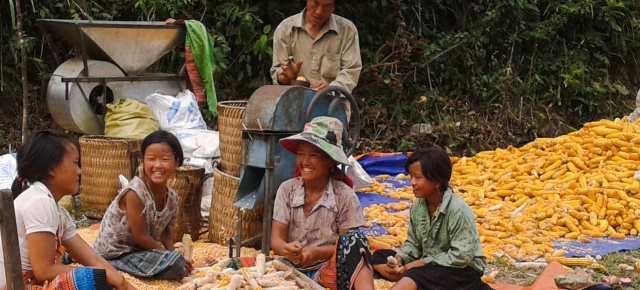
Firstly, I will be working on the IFAD-funded Sustainable Intensification of smallholder maize-livestock farming systems in hill areas of South Asia project. Directly impacting India and Nepal, the project which is a collaborative effort between ILRI, and the International Wheat and Maize Improvement Center (CIMMYT), focuses on increasing the productivity of maize-based farming, with a particular emphasis on the role that gender plays in this sector.

In addition to that, I will also be coordinating the Climate Change, Agriculture and Food Security (CCAFS) household characterization survey in South Asia for four sites – two in India, one in Nepal and the last being in Bangladesh. We will be collecting detailed information on farming resources, productivity, and economics, which will be used to develop forecasting models to measure the impact of climate change, and adaptation/mitigation strategies, upon farming households and the environment.

My remaining time will most likely be spent providing support to the dairy value chain project in Assam, India, whilst also offering support to our partners and my ILRI colleagues on the areas of database usage and data-management where I have strong experience.

For more information on Dhiraj, please view his ILRI profile page

View publications by Dhiraj on Mahider

Learn more about Operation Flood from the National Dairy Development Board

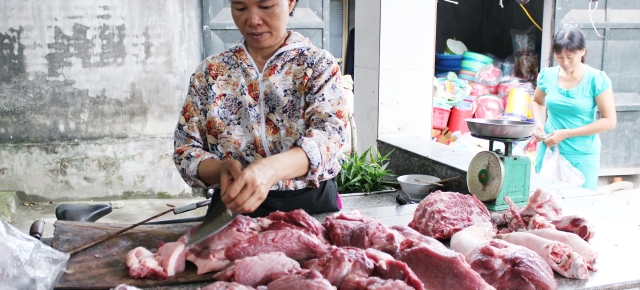
Wet Markets of Hanoi

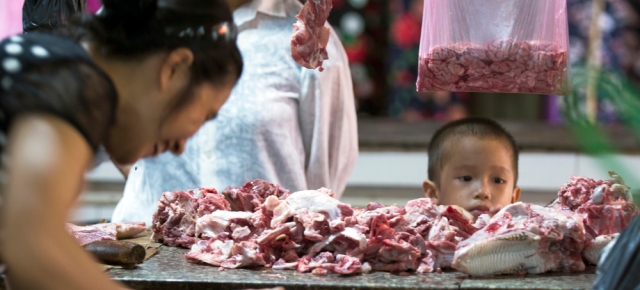
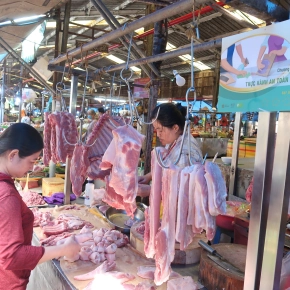
A stall owner watches over her pork and beef stock in a local wet market of Hanoi, Vietnam (photo credit: ILRI/Andrew Nguyen).

Researchers and development actors from the pig sectors of South East Asia and East Africa gathered last week in Hanoi to discuss new developments in managing food safety and biosecurity in the informal pig sector.

The workshop, organized by the International Livestock Research Institute (ILRI) in conjunction with the Australian Centre for International Agricultural Research (ACIAR), saw government ministry representatives, scientists and specialists in pig health, animal health, public health, economics and ecology, discuss their research on public health innovations and how they can be best implemented through the emerging CGIAR research programs (particularly those on ‘livestock and fish‘ and on ‘agriculture, health and nutrition.).

These two programs have identified improvements in pork production, productivity and safety in the pig-smallholder dominated markets of Vietnam, Uganda and the northeast Indian state of Nagaland as initial areas of focus.

With pig-markets in the three locations heavily weighted towards smallholder producers, the workshop paid particular attention to the challenges facing the informal pig sector. Providing support technically, organizationally and through market innovations to these smallholders is of growing importance in countries such as Vietnam. For it is in these developing economy markets, that concerns of food safety which are arising from heightened demand for animal-source foods, is being answered by public policy in favor of industrialization, and as such – threatens smallholder market access.

The three-day gathering, titled Managing risk in emerging pork markets: A South-South Symposium saw participants share short papers and presentations on the lessons learnt from the following key areas:

View photos from the symposium and field trip

Portrait of goat-keeping family in India’s northern state of Uttarakhand

Just in case you missed recent announcements, here is a selection of  reports on our International Livestock Research Institute (ILRI) activities in Asia.

Stay updated!

Sign up for email alerts on this blog

Sign up for email alerts on livestock in Asia

Each week on this blog, we meet with ILRI staff members, partners and projects in Asia to learn about their work, challenges and the opportunities they face to leverage livestock knowledge in Asia.

These days you’ll find Rainer Asse in Yogyakarta, Indonesia, where he facilitates the Ecohealth Resource Centre located at the University of Gadjah Mada as part of the EcoZD programme. Originally from Boston, Massachusetts – but with Caribbean heritage – Rainer joined ILRI three years ago, where he was initially posted to Mali at the Bamako office. Now one year into his Indonesian posting, Rainer takes some time out to discuss his work and how he is finding his first ever posting in the region.

ILRI Asia: Before coming to Southeast Asia, you had worked with ILRI in Mali. Can you briefly touch on what your work there entailed?

My postdoctoral scientist position in Mali focused on natural resource management strategies for Sustainable Management of Globally Significant Endemic Ruminant Livestock in West Africa (PROGEBE) – a project funded by the Global Environment Facility (GEF) and the African Development Bank (AfDB).

I assisted in designing and conducting research in The Gambia, Guinea, Mali and Senegal to better understand and improve linkages between natural resource use, and sustainable management of local breeds of ruminants which are well adapted to local environmental conditions (for example – the Ndama breed of cattle which is tolerant to trypanosomiasis – a zoonotic disease spread by the Tsetse fly).

Read related stories on the PROGEBE program from ILRI

ILRI Asia: Now as a member of the ILRI EcoZD team, can you tell us a little about your role within the programme?

My primary function within EcoZD is to facilitate the EcoHealth Resource Centre located at the University of Gadjah Mada (UGM) in Yogyakarta. This entails assisting and advising our partners at the Faculty of Veterinary Medicine on research, curriculum development initiatives and outreach using trans-disciplinary EcoHealth approach to investigate and manage zoonotic diseases.

Along with other ILRI staff involved with the EcoZD program – I also serve as the lead person in conducting qualitative assessments of progress and lessons learned by all the research teams working in the six EcoZD countries.

ILRI Asia: How do you see your area of expertise – Natural Resource Management (NRM) – applied in the program?

EcoZD and the EcoHealth concepts have outcome and output goals that essentially stem from NRM theory and practice. Therefore an important goal for me personally is to facilitate interdisciplinary learning and research by the EcoZD units, whilst also ensuring that key concepts from ecology continue to inform our thinking and analyses.

Similarly, I must ensure that key concepts from NRM inform our recommendations for best practices that university, public health, and veterinary personnel can adapt and adopt for local research and management of zoonotic infectious diseases.

ILRI Asia: Being your first time working in the region – can we ask if there was any significant motivation behind your decision to relocate here?

ILRI’s goal of increasing it’s presence in Southeast Asia paralleled my personal goal to work in different parts of the world. In addition, EcoZD’s interdisciplinary research, and action on zoonotic diseases offered me a chance to broaden my application of NRM strategies in a project using an innovative ecosystem-based approach (EcoHealth).

ILRI Asia: Now you’ve been here a year, are there any notable differences between the livestock sectors of Africa and Southeast Asia ?

It is sometimes problematic to make broad comparisons between two very different places such as Africa and Southeast Asia, plus, my experience in Africa is very much limited to French-speaking West Africa.

However, from my brief time here so far, I can say that there are a few general similarities in livestock/agriculture that I see between Southeast Asia and West Africa.

The first similarity I’ve noticed has to do with present-day land use, and the fact that in both regions land use is partly shaped – for good or for bad – by past colonial experiences. An example would be the emphasis placed on land for cultivating agriculture exports.

Secondly, there is also another commonality in the gendered livestock holding patterns that are at times observed in the regions. Specifically speaking – women in these regions tend to own small ruminants or small stock but rarely own large ruminants such as cattle.

And then we have the clear influence of religion and culture on livestock holding patterns in both regions. For example, pig rearing is absent in parts of both West Africa and Southeast Asia where there are significant Muslim populations.

Lastly, I also see an overarching similarly in the significant numbers of small-scale livestock keepers in the regions – as opposed to industrial large-scale livestock enterprises. The socioeconomic importance of this shouldn’t be underestimated, as small-scale livestock keepers generally have a small number of livestock which are very important to them in terms of maintaining livelihoods and household welfare.

Though scales and levels differ, there are also a number of qualitatively similar challenges that local livestock research communities face in both Southeast Asia and West Africa. One common challenge centralizes on how to do ‘pro-poor’ research (research that targets socioeconomically disadvantaged or marginalized segments of the population) that supports livelihood goals, while simultaneously empowering poor farmers and livestock holders to position themselves profitably within increasingly globalized livestock value chains.

Another challenge faced by research communities in both regions is how to best integrate issues of climate change and rapid demographic change (e.g., increased urbanization), as well as food safety and/or food security issues in integrated agricultural research for development (IAR4D) on crop-livestock intensification.

The final shared challenge I’ve noticed, is the varying levels of capacity-building needed for research and livestock personnel in both regions in order to cope with new research and development challenges stemming from linked food security/food safety and climate/demographic changes.

ILRI Asia: Can you tell us briefly about the UGM Resource Centre and how it integrates into EcoZD?

The EcoHealth Resource Centre (EHRC) at UGM is one of two resource centres within the program – the other is at Chiang Mai University in Thailand. The EHRCs are two units among a total of eight EcoZD research units – spread through six different Southeast Asian countries. The centres are unique in that they are university based, and have an education and outreach mission in addition to a mandate to conduct, and support research on zoonotic diseases using an EcoHealth approach.

The central goal of the centres is to increase the capacities of local public health and veterinary personnel who deal with zoonotic diseases. Additionally, with knowledge exchange and information-sharing seen as a major goal of EcoZD, we hope that synergies will emerge from the exchanges among university EHRCs, other research units and local research communities in the EcoZD countries.

ILRI Asia: Does your placement at UGM provide you with significant exposure to the Indonesian livestock sector? If so, have you noticed any significant trends and characteristics in your time so far?

My role actually limits my direct exposure with the livestock sector. My job at UGM is in some ways a classic example of the knowledge-brokering and research capacity-building role that ILRI is increasingly embracing as a strategy for partner executed IAR4D projects. At UGM I mainly work with future and current veterinarians, public health agents, agricultural/livestock extensionists and policy makers.

ILRI Asia: Lastly, can we ask what the remainder of 2012 has in store for you?

This year will see me continue my work at UGM, but I’ll also shift to a greater focus on my secondary role in assessing progress, and lessons learned by the eight EcoZD research units. Hopefully, the assessment and project learning work that I do will contribute to creating the synergies needed for maintaining the regional network of EcoHealth researchers that EcoZD has played a critical role in building.

Visit the EcoZD programme Wiki to learn more about the programme

Read other ILRI Asia posts regarding EcoZD

Each week on this blog, we meet with ILRI staff members, partners and projects in Asia to learn about their work, challenges and the opportunities they face to leverage livestock knowledge in Asia.

With the vast Gobi desert consuming its north, and the Yellow River running through it’s capital, Gansu province in northeastern China still manages to provide ILRI with another significant landmark of note – Lanzhou University. For it is here that Xianglin Li obtained his PhD in agro-ecology, a degree which would eventually lead him to become one of ILRI’s first China-based staff members; he is now ILRI’s China Liaison Scientist, based in Beijing.

Xianglin Li (third from left) with a group of Mongolian herders

ILRI Asia: As the Liaison Scientist for ILRI in China, tell us what your position entails?

Xianglin: My work here is mainly concerned with being the focal point for ILRI’s operations in China, with my role broadly falling into a few key areas:

  • Overseeing any official interaction between ILRI and Chinese institutions and partners
  • Providing relevant stakeholders with information about ILRI and our work here
  • Maintaining cooperative associations with other active CGIAR centers in China
  • Identifying priorities and opportunities for ILRI activities in China in association with our theme directors and project leaders.

On top of this, I maintain professional links with other professional organizations – such as the Institute of Animal Science and the Chinese Academy of Agricultural Sciences (CAAS) with whom ILRI shares a strong relationship. My time there is spent lecturing and providing advice to students at the graduate school, or fulfilling my duties as vice president of the Chinese Grassland Society, a position I’ve held for the last nine years.

ILRI Asia: With over a decade working with ILRI, what are some particular highlights of your time with ILRI?

Xianglin: Undoubtedly the most significant milestone of the last decade had to be the agreement signed between ILRI and CAAS on 20 August 2001. It was an agreement that established the ILRI Liaison Office here in Beijing, and which would ultimately enable us to operate here. The agreement’s significance is all the more important as CAAS represents not only the largest national research organization here, but also the main partner for any collaborative research CGIAR centers like ILRI carry out in China. I’m also pleased to say that since the establishment of our partnership with CAAS, our relationship has strengthened. Despite the total amount still being relatively small, we are still seeing significant increases in China’s contribution to ILRI, with additional grants beyond core funding also being made. For example, CAAS has recently committed to provide US$80,000 to support four young visiting scientists to work at ILRI headquarters in 2012.

Beyond this, we’ve definitely had other project highlights that have brought benefits to ILRI and the local Chinese research community, but also the agricultural research community in neighboring countries as well, with the major projects detailed briefly below:

Crop-Animal Systems Research Network (CASREN)

Since 1999, China has been involved in the regional CASREN programme. First in Yunnan province, and then in 2002 with the introduction of a project-site in Sichuan province that focused on smallholder sweet potato-pig systems. The Asian Development Bank-funded program used participatory approaches to spread the application of appropriate technologies to enhance the productivity of smallholder crop-livestock systems in rain-fed upland areas. During the implementation of the project, a total of US$200,300 was provided by the local government to the two benchmark sites.

Read the ILRI Outcome Story from the CASREN project in China

Establishment of a CAAS-ILRI Joint Lab on Livestock and Forage Genetic Resources (JLLGR)

With research on livestock genetic resources flagged as a priority for China-ILRI collaboration, it was great to oversee the establishment of this collaborative effort between ILRI and CAAS in May 2004. The joint lab, based at the Institute of Animal Sciences of CAAS in Beijing applies state-of-the-art technology in characterizing livestock and forage genetic resources, whilst also aiming to build capacity within the national agricultural research systems of China and Southeast Asia. Completed in April 2006 at a total cost of over ¥4 million (US$600,000) – paid fully by China  – the lab was the first such facility of it’s kind that CGIAR centers established in China. It has provided vast new opportunities for international cooperation on conserving livestock and forage genetic diversity within the region, exemplified by the fact that it has received over forty visiting scientists from the region for collaborative research and training on biotechnology.

A new partnership with the National Natural Science Foundation of China (NSFC)

In 2010, the ILRI Beijing Office facilitated the visit of a senior delegation from the NSFC to ILRI Nairobi, led by Dr. Qing Chang, Director General of NSFC’s International Cooperation Department. The NSFC is one of the largest funding sources in China for basic research, and has identified livestock genetics and genomics research using molecular biotechnology as a priority area. Following this, the office also coordinated the visits of ILRI’s regional representative at the time – Iain Wright – and Biotechnology theme director – Vish Nene – to NSFC. Subsequently, an NSFC-ILRI workshop on animal biotechnology was held in Beijing in December 2011, with ILRI Director General – Jimmy Smith – and other senior scientists in attendance. The workshop set priorities for ILRI-NSFC collaborative research and generated calls for research proposals – which are still currently being finalized between ILRI and NSFC scientists.

ILRI Asia: What are the biggest challenges currently facing the Chinese livestock sector as you see it?

Xianglin: The livestock sector in China has developed rapidly over the past two decades and has dominated the ‘livestock revolution’ in terms of aggregate size and growth rate. However, poor livestock food product quality, safety and reliability are major problems facing the Chinese consumer. These issues also act as a major obstacle in allowing smallholders to gain market access, and definitely need to be addressed accordingly.

China is also experiencing issues in meeting heightened demand for feed grain within the existing levels of supply. Traditional livestock production has been based on locally available feed resources, such as natural grazing and crop residues that had no value to the human diet. However, as livestock production grows and intensifies, the demand for locally available feed resources is quickly outstripping supply. There is now a strong shift towards feed concentrates that are traded both domestically and internationally – exerting significant pressure on the grain market.

As the size of the livestock sector here continues to grow at a rapid pace, China will continue to face issues of rapid land degradation from excessive grazing. It has been generally agreed that 90% of China’s grasslands have already degraded, with degradation increasing at a rate of 200km2 per year – with significant regional variation further complicating matters. In addition to this, pastoral regions of China have undergone a rapid increase in human population density over the last decade. If the amount of livestock (or amount of ‘wealth’) is to remain at a similar per capita level in order to maintain the standard of living, than the total stock number and density of livestock per unit of area will also have to increase. The issues of land degradation and relatively low incomes have unfortunately come to be inter-related, and self-reinforcing. In the absence of other livelihood options, low-income pastoralists have been forced to increase livestock numbers, which leads to grassland overstocking and degradation, which in turn reduces the potential of grassland production and income generation, thus further exacerbating the degradation-livelihood cycle.

These are some of the major problems that we currently face; there is also the environmental and public health problems that have arisen with the burgeoning livestock sector. Air and water pollution caused by mismanaged animal waste in areas of high-livestock density is becoming another prominent issue in China.

ILRI Asia: What area/s of the livestock sector is ILRI currently focusing on in China?

Xianglin: Generally speaking, ILRI’s projects in China are quite limited in terms of project numbers, size and resource investment. In the past, smallholder mixed crop-livestock farming formed the focus of ILRI’s work in China, however with the completion of the CARSEN project, the focus has shifted somewhat away from this area of research.

In 2009, the introduction of a country team in Yunnan province as part of the Ecosystem approaches to better management of zoonotic emerging infectious diseases in the South East Asia Region (EcoZD) program signaled a new area of focus for ILRI. Building on this, 2011 saw ILRI and NSFC identify ‘Basic research in animal health to prevent and control important diseases’ as a priority area for collaborative research in China, with three key areas identified for project proposals so far:

  1. Epidemiology and disease transmission
  2. Molecular immunology
  3. Antigen identification systems and improved antigen delivery systems

Today, ILRI has also earmarked research on livestock genetic resources as being another priority area in China. This priority is of course well supported by the establishment of the ILRI-CAAS joint lab that I briefly discussed earlier.

ILRI Asia: Have you seen signs of a shift in attitude towards agricultural livestock research in China recently?

Xianglin: Yes, there have definitely been some positive signs in recent times. For instance, there has been a dramatic increase in the level of government investment in livestock research, and the market now places greater emphasis on quality rather than quantity in regards to livestock products. More attention is also being paid to large-scale industrial livestock systems and value-added livestock products, and there is definitely increased consideration of the interaction between livestock production, the environment and public health.

As you might have picked up, the research sector has also seen an increase in the application of modern technologies such as molecular tools and genetic transformation, while also engaging a higher degree of international cooperation, and paying more attention to international periodicals.

ILRI Asia: Is there any aspect of the livestock sector that you believe could benefit from greater attention in China?

Xianglin: Definitely. Some of the issues I’ve touched upon earlier are, in my opinion, areas of priority for livestock research here. In no specific order, these issues are:

  • A feasible characterization and conservation strategy regarding the diversity of indigenous livestock genetic resources, including disease-resistant genetics;
  • The rangeland degradation-livelihood problems of pastoral systems in Western China that I alluded to earlier;
  • Vaccine development;
  • Livestock food safety and the resultant human health issues.

ILRI Asia: Finally Xianglin, what has 2012 in store for you with ILRI?

Xianglin: Well, with a new ILRI Director-General in Jimmy Smith, and Heads of Asia in Purvi Mehta-Bhatt, I hope it will result in a clear strategy for ILRI program development in China being etched out. I will continue my efforts to identify new opportunities and to mobilize resources for ILRI activities in China.

Next year will also see China celebrate ’30 years of the CGIAR in China’ and I do hope the remainder of 2012 will bring an increased role for ILRI in China.

Xianglin Li (center) conducts a participatory survey in a village of Sichuan province

For more information on Xianglin, please view his ILRI Profile Page

Read the ILRI report on CASREN interventions in Sichuan province

View ILRI projects in China

How is the CGIAR in Action in China?

Each week on this blog, we will meet with ILRI staff members, partners and projects in Asia to learn about their work, challenges and the opportunities they face to leverage livestock knowledge in Asia.

This week, Arindam Samaddar from our New Delhi office provides us with an anthropologist’s perspective on the Indian livestock sector. Prior to joining ILRI in 2009 as a Livestock Systems Researcher, Arindam had already built a strong association with ILRI through his work on the System Wide Livestock Program whilst with CGIAR partner – the International Maize and Wheat Improvement Centre (CIMMYT).

ILRI Asia: Since joining ILRI, what have been your major research highlights from the programs you’ve been involved with?

Arindam: At present, I am mainly involved in the “Cereal Systems Initiative for South Asia” (CSISA) project funded by the Gates Foundation and USAID. It aims to provide an overall strategy for contributing new science and technologies in increasing both short, and long-term cereal production growth in India, Bangladesh, Pakistan and Nepal.

As one of the four Consultative Group on International Agricultural Research (CGIAR) partners involved in CSISA, ILRIs focus within the program is primarily on the integration of livestock in future cereal systems – via two broad objectives. The first is through assessing the quality of straw/stover from major cereal crops, with a view to incorporating these traits through plant breeding programs. Second, we are looking to develop and disseminate improved feeding strategies to increase the efficiency of residue based feeding in mixed farm systems.

As the Livestock Systems Researcher for ILRI, I am primarily involved in designing and coordinating field activities and socio-economic surveys in India, Nepal and Bangladesh. One of my main responsibilities is to lead the activities of conducting training, and farmer-led dairy feed experimental trials. These trials are designed to demonstrate the efficiency of residue based feeding for improved crop-livestock integration in South Asia. I build upon this by establishing links and collaborations with various national government research partners (NARES), non-governmental organizations (NGOs), the private sector, cooperatives, farmers and women’s self-help groups to widen the impact and reach of our activities.

Put simply however, the major highlights of our research findings so far are:

  1. More than 70% of the costs for dairy production comes from feeding;
  2. The major source of feed comes from cereal straws (mainly paddy and wheat);
  3. The farmers’ perceptions of dairy animal feeding correlates with their own traditional food habits. For example in areas where the staple food is rice, farmers tend to use rice straw as the main ingredient in the feeding rations. In wheat growing areas, wheat straw is the main ingredient;
  4. In all the sites, farmers lack the basic concept of animal nutrition and feed quality;
  5. There is great scope to introduce underutilized and non-utilized dry cereal straw in dairy feeding for better crop-livestock integration.

 ILRI Asia: What’s in store for you in 2012?

Arindam: So far, through farmer-led experimental trials and training sessions, we’ve been quite successful in demonstrating the advantages that residue-based feeding strategies in different project sites offer.

Now the challenge lies in scaling these activities up and out to efficiently reach more farmers. Most of my efforts will be geared towards understanding the roles of different actors and institutions in the dairy value chain in order to build meaningful innovation platforms for the dissemination of context-specific new feeding strategies. This will involve continuous dialogue with farmers, cooperatives, self-help groups, research institutions, state and central government research institutes and the private sector.

ILRI Asia: Where do you see your work with ILRI contributing to India’s livestock sector?

Arindam: As an agricultural anthropologist, I try to understand technology choices and their impacts at the household level, from the perspective of agronomic and socio-economic research, in the frameworks of both micro and macro farming environments.

The experience I gained from various projects in India, Bangladesh and Nepal in assessing the impact of adopting agriculture technologies and residue use on mixed farming systems, provided me with a broader perspective and understanding of the farmer’s worldview. I was able to develop an appreciation of the importance of specific social and economic factors, and also the role of different institutions in influencing decision making and adoption practices, and ultimately – how these all relate to their overall livelihoods and everyday life.

I truly believe that the study of the human element in crop-livestock activities which focuses on the interactions of ecology, technology, gender roles, household and social structure within the local and broader farming environments (institutions) helps in understanding issues pertaining to adoption, constraints and the process of adaptation of technology. The knowledge gained from this approach can be applied towards more effective targeting and dissemination of technologies, which target both men and women for better livestock production in the mixed-crop livestock systems of South Asia.

ILRI Asia: What are the unique challenges and opportunities

Arindam: From my perspective, I believe that there are a few clear challenges and opportunities facing the Indian livestock sector currently:

 Challenges:

  • The diverse range of cultures and traditions that exist all the way from the subsistence-based level of crop-livestock systems to the commercial level can be particularly daunting;
  • The crop and livestock sectors are by-and-large independent of one another, thus the research and development of the sectors follows suit;
  • The need to bring different actors onto a common platform for livestock research can prove to be incredibly difficult due to strong differences in institutional cultures.

Opportunities:

  • Despite being the largest producer of milk in the world, India has one of the lowest rates of milk productivity;
  • An incredibly high number of poor farmers are involved in the mixed crop-livestock system;
  • A wide range of differences across states and regions in terms of the composition of their livestock sectors;
  • There is much scope to strengthen different actors within the value chain to make the system more efficient and productive.

Learn more about the Cereal System Intiative South Asia (CSISA)

Read related stories from ILRI News about the CSISA

Each week on this blog, we will meet with ILRI staff members, partners and projects in Asia to learn about their work, challenges and the opportunities they face to leverage livestock knowledge in Asia.

Initially trained as a medic, Jeff  Gilbert has since reverted to his original career aspiration of being a veterinary epidemiologist. From Northern Ireland originally, Jeff’s work has seen him working in several countries such as Cameroon, China, Vietnam and Afghanistan to name but a few. Now based in in Vientiane in Laos, Jeff coordinates the ‘EcoZD‘ project (Ecosystem approaches to the better management of zoonotic emerging infectious diseases in the Southeast Asia region).

ILRI Asia: At the recent EcoZD annual progress meeting, the concepts of ‘Eco Health’ and ‘One Health’ were quite prevalent. Can you shed some light on their role in the project?

These ‘two’ concepts are essentially theoretical approaches to research, with both approaches providing substantial overlap to one another actually. Simply put, I consider One Health as having a strong biomedical focus, whilst also taking into account wildlife. Eco Health meanwhile, takes this initial concept, and builds upon it. Aspects of social sciences such as sociology and economics are taken into consideration within this approach.

ILRI Asia: What does 2012 have in store for you?

In actual fact, the EcoZD project should have closed this week on 29 February! However, the project was granted an eighteen-month extension due to a planning period that took longer than originally anticipated as multi-disciplinary teams were formed in our project countries to design and conduct the research.

Teams in Cambodia, Yunnan (China), Indonesia, Lao PDR, Vietnam and a joint Thai-Vietnamese team are currently conducting or completing research on priority zoonoses in their respective countries. Additionally, ‘Eco Health’ Resource Centres at Chang Mai University in the north of Thailand, and the University of Gadjah Mada in Indonesia are establishing themselves as local South East Asian resources for ‘integrative health’ approaches.

ILRI Asia: Due to the large-scale nature of the project, there must be some unique challenges and opportunities that you’ve come across?

The multi-country aspect of the project definitely brings about some distinct challenges. First off, we have the huge challenge of language. Unlike Latin America and sub-Saharan Africa, there is no European lingua franca here, thus we are limited to involving those who speak English. On top of this, the One Health and Eco Health concepts each bring with them their own distinct ‘languages’ – which has at times been a cause of confusion amongst our project partners.

Somewhat unrelated – we’ve also seen certain country teams experience difficulty in accessing particular web resources due to exclusions being placed upon their countries by web-administrators. An issue we are continually having to account for unfortunately.

Of course, let’s not forget that in keeping with the ‘Eco Health’ approach to our work – we’ve put together a balanced team of medics, vets and social scientists in a dynamic team, which in itself poses the greatest challenge of all!

ILRI Asia: Has being located in Laos provided you with greater insights into the livestock sector there? Are there any particular aspects that set it apart from its neighbouring countries in this respect?

As EcoZD is a regional project, I’ve only been able to commit around one-eighth of my time to the local Lao team, despite being based here in Vientiane. I was however responsible for putting the team together, and assisting them with the planning and introduction meetings at both pilot provinces. Also – with the availability of counterparts we have worked closely with the Australian Centre for International Agricultural Research (ACIAR) who are conducting similar research that complements what we are doing.

Lao PDR is a fascinating country with a relatively low population of approximately 6.5million. There still remains a strong reliance on agriculture in the rural areas where pigs are favoured as the main livestock. However, that is not to say that buffalo, cattle and goats are not also common. There is a preference here in Laos to eating raw meat and fish which exposes people to a number of important zoonoses, some of which can predispose them to epilepsy and liver cancer, as well as fatal or other long-term effects of zoonotic infections.

Jeff Gilbert (front row-centre) and the other participants from the 2nd outcome mapping workshop for EcoZD

For more information on Jeff, please view his ILRI Profile Page

Learn more about the EcoZD project

Read the ILRI Asia post regarding the EcoZD annual progress meeting

Learn more about ‘One Health’ and ‘Eco Health’

Each week on this blog, we will meet with ILRI staff members, partners and projects in Asia to learn about their work, challenges and the opportunities they face to leverage livestock knowledge in Asia.

Based in New Delhi, India, but originally from the south-western coastal state of Kerala – Padmakumar, or as he simply prefers – Padma, takes a moment to discuss the ‘Enhancing Livelihoods through Knowledge Systems’ (ELKS) programme that he leads. 

ILRI Asia: With the ELKS project being the first time ILRI is partnering with the Tata Trust, can you shed some light on its role in India?

The Sir Ratan Tata Trust is one of the oldest philanthropic institutions in India, and has without a doubt, played a vital pioneering role in changing traditional attitudes towards charity, whilst also introducing the concept of philanthropy. The Trust, along with it’s other allied trusts – such as the Navajbai Ratan Tata Trust  – has been, and continues to be major supporters of efforts to improve education, health, arts and culture, governance and significantly for ILRI – rural livelihoods in India.

Under the Trust’s rural livelihoods portfolio, support is provided to a range of non-government organisations (NGOs) whose focus is on implementing livestock based livelihood projects throughout India. Generally speaking however, the Trust’s initiatives with these NGOs have required professional support in their planning and implementation, thus providing the premise for the partnership between the Tata-Trust and ILRI. Under the partnership, ILRI in consultation with various partners provides assistance in identifying the relevant policy, technical or institutional gaps, whilst also providing on-the-ground support in the actual implementation of the projects.

ILRI Asia: What does 2012 have in store for you?

With the three-year program commenced in 2011, this year I will be focused on overseeing the actual implementation of the project’s activities, whereas 2011 was more a year of preparation, or shall we say – an ‘explorative’ phase. If all goes to plan this year, next year will see us focus on policy dialogue to scale up our research outputs.

ILRI Asia: Based on your extensive experience in the agricultural-research sector in India, what do you see as being the major breakthroughs in recent times, and also – where do you see the sector heading?

From the perspective of the livestock sector, I believe that there have been two key breakthroughs in India over the last four decades, with the first being the introduction of ‘cross breeding’. Second would be ‘marketing’, initiated by the Operation Flood programme in 1970. This program ultimately enabled India’s move towards becoming the largest producer of milk in the world.

In my opinion, there is an emerging tendency here among researchers to focus more on the ‘soft’ part of research, which although is important, should not be at the cost of the ‘hard’ part or not by replacing it. Especially so in India where livestock only contributes to a relatively low percentile (20%) of the income basket of the poor, we should focus more on research that provides significant improvement of the livestock income of the poor (20 to 40%?), otherwise our time will be wasted with inefficient programmes that make comparatively insignificant impacts.

For more information on Padma, please view his ILRI Profile Page

Learn more about the ELKS project

Read related stories about the ELKS project from ILRI Asia

Learn more about the Operation Flood from the Indian National Dairy Development Board

Just in case you missed recent announcements, here’s a selection of  reports on our International Livestock Research Institute (ILRI) activities in Asia.

Stay updated!

Sign up for email alerts on this blog

Sign up for email alerts on livestock in Asia

Each week on this blog, we will meet with ILRI staff members, partners and projects in Asia to learn about their work, challenges and the opportunities they face to leverage livestock knowledge in Asia.

Recruited to ILRI in July of 2011, Korapin Tohtubtiang has built on her experience working in Northern Laos to provide Monitoring and Evaluation (M&E) and operational support to the ILRI-led EcoZD project in South East Asia. Currently based in Bangkok, but originally from the southern Thai province of Trang, Korapin is hoping to cultivate a different perspective to M&E in ILRI’s projects.  

Korapin Tohtubtiang (far left) leads a discussion on outcome mapping in Kunming, China

ILRI Asia: Since joining ILRI, what are the major projects that you’ve worked on and/or the major research highlights?

Korapin: My main area of focus with ILRI has been on the project aspect of monitoring and evaluation, and in particular how this aspect of project management can be further integrated into our research projects. Of course, I have a particular focus right now on the EcoZD project in South East Asia as that is my current attachment.

Being part of the EcoZD team has provided me with a great opportunity to introduce participatory planning, and a particular M&E tool called Outcome Mapping to our multiple partners which I’m really quite excited about. The main idea here is to recognize changes within our partners as they translate research findings in to actual practice. Essentially we are looking to go beyond simplistic outputs and really chart out the longer term outcomes.

This process will hopefully provide a substantial learning opportunity for not just our partners, but also the core ILRI team involved with the project. The way I see it – the tool will help us recognize the actual process of achieving outcomes, and not just the actual outputs at the end.

ILRI Asia: You were recently in Lebanon for an Outcome Mapping workshop – did that provide you with any new insights on how outcome mapping can be further integrated into research projects like EcoZD?

So yes, I recently attended the Outcome Mapping Lab for 2012, which was incredibly useful. Like most other workshops, the most beneficial part of the week was being able to learn from the many other outcome mapping practitioners who participated. It was incredibly helpful to hear first-hand accounts of how outcome mapping had been successfully adapted into their organizations.

A serious issue we face in the EcoZD project lies in the sheer scope of the project. We have six individual country teams who all bring differing levels of competencies to their work – which includes of course their familiarity with outcome mapping. Fortunately, this was a problem shared with other people at the meeting and I was able to gain some tips to help take us forward.

ILRI Asia: Based in Thailand, what are the some of the unique challenges and/or opportunities you’ve encountered working in Asia with ILRI so far?

Well, the biggest challenge we’ve encountered so far is simply put – effective communication. Our project teams in each country comprise several institutional partners, which when added to the ILRI team, ends up being quite a large number of moving parts. Getting all these parts communicating regularly, and effectively within the country, and even between countries is definitely a challenge for us.

However, this ‘problem’ also provides us with a great opportunity. Especially as ‘learning’ and capacity building is seen as such an important element for the EcoZD project. I think that in taking this approach to our project partners, we’ll be able to really forge and strengthen our relationships with our partners – whilst also providing a good opportunity for mutual learning from one another as we map out the project outcomes.

Learn more about EcoZD

Next Page »

Follow

Get every new post delivered to your Inbox.